Tuesday, 3 January 2023

Thinking Activity- Trends and Movements of 20th century

 This blog is written in response to the thinking activity given on the Trends and movements of the 20th century, by Yesha Bhatt Ma’am at the Department of English, MKBU. in this blog i am going to discuss about three major moments of art and literature of 20th century and those are Expressionism, Surrealism and Dadaism.


Expressionism


Expressionism, artistic style in which the artist seeks to depict not objective reality but rather the subjective emotions and responses that objects and events arouse within a person. The artist accomplishes this aim through distortion, exaggeration, primitivism, and fantasy and through the vivid, jarring, violent, or dynamic application of formal elements.


Expressionism was first observed in the works of Vincent van Gogh, Edvard Munch, and James Ensor, each of whom in the period 1885–1900 evolved a highly personal painting style. These artists used the expressive possibilities of colour and line to explore dramatic and emotion-laden themes, to convey the qualities of fear, horror, and the grotesque, or simply to celebrate nature with hallucinatory intensity.


To understand expressionism we had a task in our classroom with all our classmates to draw something collaboratively on the viewboard. We all used our imaginations to draw something and most of us came up with very good ideas and also with very good drawing skills.


In this drawing I drew the Hand with an eye on it. It came into my mind from the thought of the internet as the various internet platforms always get information of our activities and it un escapable, to express something like that I drew that hand which has an eye on it.


Surrealism


Surrealism, movement in visual art and literature, flourishing in Europe between World Wars I and II. Surrealism grew principally out of the earlier Dada movement, which before World War I produced works of anti-art that deliberately defied reason; but Surrealism’s emphasis was not on negation but on positive expression. 


 According to the major spokesman of the movement, the poet and critic André Breton, who published The Surrealist Manifesto in 1924, Surrealism was a means of reuniting conscious and unconscious realms of experience so completely that the world of dream and fantasy would be joined to the everyday rational world in “an absolute reality, a surreality.”


To understand Surrealism we had a classroom activity in which we all did drawings based on the surrealism. In this activity also everyone came up with lots of unique ideas and also inspired from different other artworks and tried to interpret and recreate something new out of it.


For this activity I draw the picture of a girl that is cut into two parts and form inside her is coming a hand that is somewhat rotten also like a dead body.


Dadaism


Dada or Dadaism was an art movement of the European avant-garde in the early 20th century, with early centers in Zürich, Switzerland, at the Cabaret Voltaire. New York Dada began c. 1915, and after 1920 Dada flourished in Paris. Dadaist activities lasted until the mid 1920s.


Dada artists sought to expose accepted and often repressive conventions of order and logic, favoring strategies of chance, spontaneity, and irreverence. Dada artists rejected cultural standards and values, and were thus dissatisfied with traditional definitions of what art could be. Duchamp advocated for a philosophy of total freedom in art, and many followed suit. Artists used assemblage, collage, and mass-produced everyday objects to reject cultural standards.


Dada was born out of a negative reaction to the horrors of the First World War. This international movement was begun by a group of artists and poets associated with the Cabaret Voltaire in Zürich. Dada rejected reason and logic, prizing nonsense, irrationality and intuition. Judaism's most profound characteristics include humour, whimsy, artistic freedom, emotional reaction, irrationalism, and spontaneity. Invaluable created a fun, educational infographic that details some of the elements of Dada literature, and it includes writing prompts to help master each.


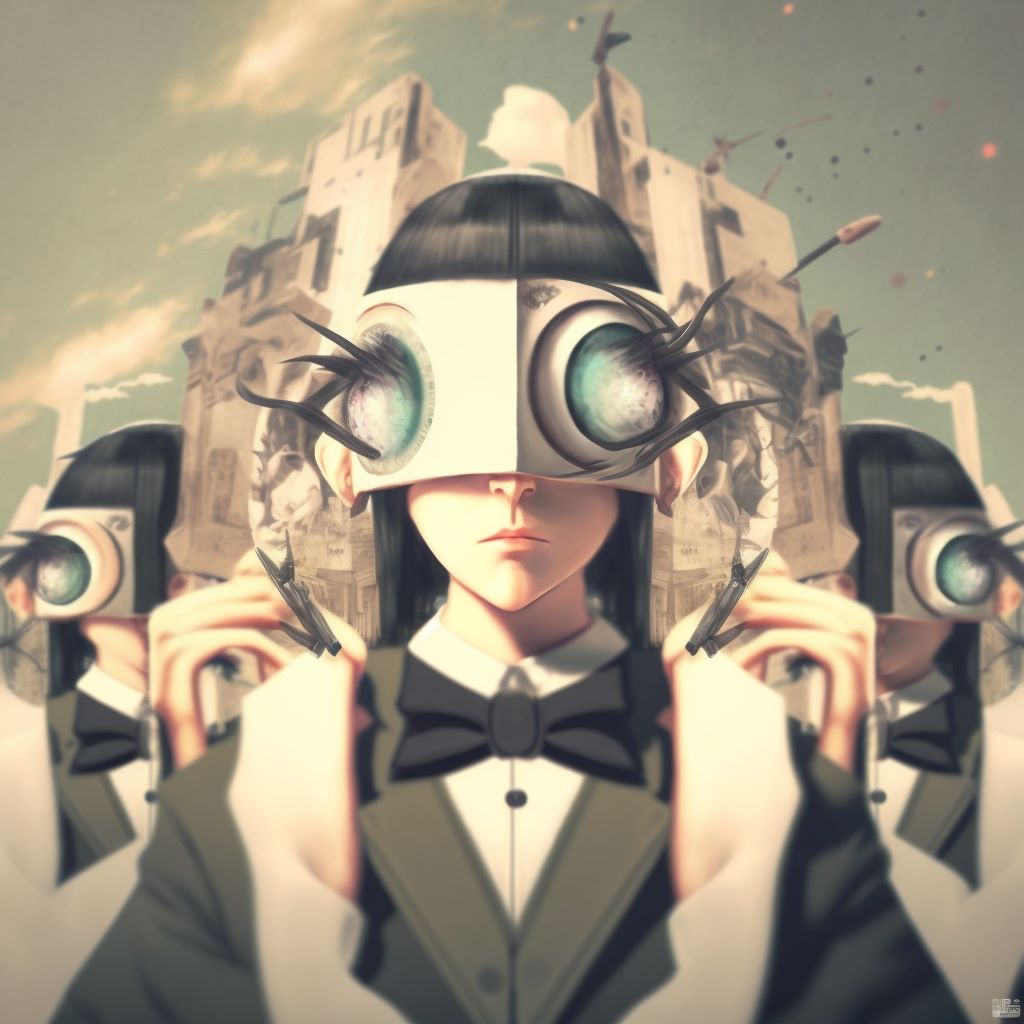
After learning about Dadaism we were all asked to make a Dadaist art. Some of us came up with photography, poems and drawings. I chose to do something different and after some digging and help from a friend I made some images from two online platforms Dall-E and Midjourney. Those two platforms offer free and premium service of generating Art works with the help of AI. What we have to do is to type a description of what we want or upload a photo of which we want to create something and the software will auto generate the artwork for us. I have chosen to make something out of the image of an anime character of Albedo from the anime series Overlord. The original picture was simple but after processing in the software it came out totally different.


Thank you for visiting.

Saturday, 31 December 2022

Thinking Activity- The Wasteland by T. S. Eliot

This blog is written in response to the thinking activity on The Wasteland by T. S. Eliot given by Dr. Dilip Barad Sir at the Department of English, MKBU.


The Wasteland


Introduction


The wasteland is 'modern Epic' poem by T. S. Eliot.

This poem was published in 1922 and is considered as one of the most important poems of the twentieth century and central work of modernist poetry. The poem contents lots of references from literature and mythology from around the world and that's why it sometimes confuses the reader but after identifying these illusions the poem makes great sense. 


The poem is divided in five parts,

  1. The Burial of the Dead.

  2. A Game of Chess.

  3. The Fire Sermon.

  4. Death by Water.

  5. What the Thunder Said.


Central theme of the poem


The poem deals with the central theme of Spiritual degradation and Sexual perversion, as the poem progresses the themes go deeper and make more sense. Through those themes the poem points on the malaise of the modern world and how it is creating its own 'wasteland' by staying away from true spirituality. 


1) What are your views on the following image after reading 'The Waste Land'? Do you think that Eliot is regressive as compared to Nietzche's views? or Has Eliot achieved universality of thought by recalling mytho-historical answer to the contemporary malaise?


Eliot is not regressive at all; rather , he pointed out a key to change the past mistakes of old people by giving historical and mythological examples. 


If we compare Eliot to Nietzsche then we have to understand what both of the thinkers say.


Nietzsche denied the fundamental rationality of the universe and called Christian morality, ‘the slave morality’. said that "God is dead", thus he believed in "Will to Power", that the stronger people will rule. He gave his theory of 'Ubermensch' (Overhuman/ Superhuman or Superman) , an upgraded version of man who will be man but more than man. That was only theory and his somewhat futuristic imagery.


He himself said about his beliefs that,

"This deed is still more distant from them

 than the most distant stars "

(The Gay Science)


In contrast Eliot speaks about past mistakes in order to achieve better results in present and in future. He is not regressive but he seeks progress with knowledge of past and present understanding. He looks backward in Upanishads, Buddhism and in Christianity only to go forward. He wants to point out past mistakes that have repeatedly happened throughout history and by identifying it he does not want to repeat it. As the saying goes,

“Those who cannot remember the past are condemned to repeat it.” – George Santayana


2) Prior to the speech, Gustaf Hellström of the Swedish Academy made these remarks:
What are your views regarding these comments? Is it true that giving free vent to the repressed 'primitive instinct' lead us to happy and satisfied life? or do you agree with Eliot's view that 'salvation of man lies in the preservation of the cultural tradition'?


I don't think that giving free vent to the repressed 'primitive instinct' leads us to a happy and satisfied life as everyone has their own way of living life and that can be harmful at Grand level. When everyone has a choice to live their way there has to be consequences.

Once action can bring happiness to themselves but also can harm others, in that scenario there should be limitations and proper management.


The type of management we seek can be found in our culture and tradition. We don't have to cling into our tradition and culture but from time to time also have to modify and make changes that can be helpful and appropriate to time and future.


3) Write about allusions to the Indian thoughts in 'The Waste Land'. (Where, How and Why are the Indian thoughts referred?)


Poem 'The Wasteland' contains various images of Mythological and Literary allusions from various countries and languages. Throughout the four parts of the poem Eliot describes the themes of Sexual perversion and Spiritual degradation and the malaise of modern world, to seek redemption and answers he comes to the Knowledge of 'Upanishad' in the fifth part of the poem 'What the Thunder Said'.


“Ganga was sunken, and the limp leaves

Waited for rain, while the black clouds

Gathered far distant, over Himavant.

The jungle crouched, humped in silence.

Then spoke the thunder”


In this part poem refers to the divine message of Brahma the Prajapati, the father of all three beings men, demons and gods.


Da- the message from the sky and it's interpretation in three Varieties


Datta : to give, not only charity but giving oneself for some noble cause. It's not mere mechanical activity but to devote oneself for noble deeds and for that he has given an example of Karna, Bhamasha.

Dayadhvam: Sympathy, empathise yourself with the

sorrows and suffering of others, come out of your isolation and live into others.

Damyatah : Self Control, control over one’s passions and

desires.


Poem ends with the line,

“Shantih shantih shantih"


The poem ends with the three repetition of the word "Shantih" that comes from Upanishad' and suggests the meaning 'the peace which passeth understanding' through this line poet wants to achieve and share the peace to all mankind.


4) Is it possible to read 'The Waste Land' as a Pandemic Poem?


Poem 'The Wasteland' was published in 1922 so most of the time it was studied, it was studied through the lens of post World War I and II, but thanks to Elizabeth Outka we got to see the hidden side of the poem that reflects the Influenza Flu Pandemic as the poem is Collage of many images. The Spanish Flu that was acquired in the same era of time in 1918 can also be part of the reading of the poem 'The Wasteland'.


The poet was also caught by the Flu in its second wave in 1918, the autobiography elements are also seen in the poem, one wasteland of pandemic is also seems to be created in the poem.


Monday, 26 December 2022

Thinking Activity- 'For Whom The Bell Tolls' By Ernest Hemingway

This blog is written in response to the Thinking Activity on Ernest Hemingway's 'For Whom The Bell Tolls' given by Yesha Bhatt Ma'am at the Department of English, MKBU. 

In this blog, I have tried to explain what is a Hero?, what is a typical Hemingway Hero? and How is Robert Jordan a Hemingway Hero?

What or Who is a hero?


When we use the word “Hero”, we usually label someone who is popular or influential in some ways. First it begins with our parents, at a young age our heroes are our parents, then as we grow and come to know various people our hero changes like gods, sports players, freedom fighters, comic heroes etc. 

Let's discuss what a hero is. And  the definition and characteristics of a hero.

According to Webster’s Dictionary, a hero is “a mythological or legendary figure often of divine descent endowed with great strength or ability, an illustrious warrior, a man admired for his achievements and noble qualities, one who shows great courage, the principal male character in a literary or dramatic work, the central figure in an event, period, or movement, or an object of extreme admiration and devotion”.

Thus a hero is not at all a common man but he becomes beyond it and a higher human being. A hero is noble and with a certain set of values. Heroes usually work for the ‘Greater Good’ of society and the world. It's not necessary to every hero that they have superhuman abilities but those who take a stand against the Wrong or evil that harms innocents and causes troubles. 

One of the best qualities of a hero is that they are always ready to sacrifice or put their life on the line. They do not agree on anything for fear of their life but in contrast they raise their voice even if there is danger lying ahead.

All those things are in hero but that does not mean that heroes are exceptional to the danger and they always stay without harm. Sometimes heroes are the ones who are mostly the ones who go through sufferings that others can only imagine. For example we can take Bruce Wayne AKA The Batman Who is a Billionaire but also is an orphan who watches his parents murdered before his own eyes. Therefore he realizes the cruelty and reality of the world in his childhood and then becomes Batman, a symbol of Justice. He fights crime and puts justice in society without getting or demanding any rewards. He protects his city Gotham from crime but also works for the welfare of the city through his original personality Bruce Wayne.


Bruce Wayne is not a Superhuman but he goes beyond his limitation and upgrades his level to superhuman but  If we see the Hero through the lens of “superhuman” then there is also an example of superhuman and it is Spider-Man.


Peter Parker who is a normal teenager who gets bitten by a hybrid Spider and becomes Spider-Man, but that does not stop his problems as he is also a teenager, a middle class boy and also not well aware of the world. But the best part is that he becomes a hero as he grows up from a boy to man and he also fights villains and criminals and he also solves his problems as a common individual. He also loses sometimes, like he loses his uncle Ben who gives him the philosophy of hero that,
“With great Powers, comes great Responsibilities.”


Joseph Campbell also tries to give definition of hero that,

“The hero, therefore, is the man or woman who has been able to battle past his [or her] personal and local limitations to the generally valid, normally human forms”

for understanding what is or makes a hero watch this video.


What is a Hemingway hero?


His most of Protagonist comes from his own experience and understanding, so one or another ways many have his resemblanse or impact of his life.

The representation of Hemingway's hero is known as the ‘code hero’. In the works of Ernest Hemingway the protagonist follows certain codes like code of honour, courage, endurance etc. therefore through those codes or the characteristics those heroes try to live in the world surrounding them. They don't just live but live in pride and dignity and do heroic things. They suffer from daily life pain and sufferings. They have a past life of trauma and troubles. They overcome all the difficulties of life and prove that they are the strongest and wisest.

Another characteristic of Hemingway’s hero is that they are realists and do believe in a realistic approach to the various events. They give thoughts to certain situations, they apply logical understanding and experience into given circumstances.  

They are the men of action in various situations. The plot of the story moves along with them as we follow their journey and witness their actions and courageous decisions. Mostly they meddle between good and evil, as they have their own philosophy and understanding of the situation and by that they pick sides and do their work.

The key point of the Hemingway hero is that  'A man can be destroyed but not defeated', That most of his heroes refuse the defeat and instead they die but in dignity.

One of the good examples of Hemingway's code hero is in ‘The Old Man and The Sea’, the fisherman called Santiago. An old man who goes fishing in the sea but fails for just one or two but for Eight four days yet he does not give in but goes on and on. We see his glorious past as the young fisherman, He was strong and hard to defecate but he was now aged and was an old man.


He stays in the sea for three days and two nights and catches the Marlin fish. He deals with various difficulties like wind and bad weather. Sharks attack his boat and eat the Merlin fish. At the end there's only bones and the skeleton of the fish that he brings to the shore but even that was a great thing as before that no one had ever seen or caught that big fish. So in the end he defeats all his problems and resolves in dignity.

The Old Man and The Sea


How is Robert Jordan a Hemingway hero?


Robert Jordan is the protagonist of the novel ‘For Whom the Bell Tolls’, established as a typical Hemingway Hero. For him the line of Donne is appropriate that,
“No man is an island entire of itself”

He is the code hero as Hemingway has established living on the code of  honour, courage, endurance. He is a soldier from the US and takes part in The Spanish civil war of independence from the side of Guerrilla fighters of republicans and takes the mission of blowing a Bridge from Colonel Golz. He has his own philosophy of doing his given duty. He does believe in the republican but he believes that what they are fighting with is more evil and so is he fighting alongside them.

He is a noble man and lives with dignity and wants to contribute in the lives of others and is without any personal motive or agenda and does not seek any reward for the help that he was doing in the war. For him it was the duty that he must fulfil, even if it takes the sacrifice of his life.


He is pretty much a person tormented by his past as most of Hemingway heroes, and finds salvation when he falls in love with Maria, and finds a different approach to his life though that. He becomes more confident on his purpose of life and becomes more conscious of his mission. Even in the end when he is left alone the only moving force he can find is his love toward Maria.

He is a realistic person and also a true hero that choses self sacrifice in order to save his friends. He analyses the truth of given situations and comes to the conclusion that if he stays where he is because of his deep wound it's better for the rest to live because that would be a logical response to given circumstance and that's what he does.


Robert lives in the world of pain and suffering, fulfils his duty, falls in love and eventually sacrifices himself for the sake of love and friendship and becomes a martyr. He lives with pride and dignity and dies undefeated as he fulfils his duty.

So, Robert Jordan, the protagonist of the novel ‘For Whom The Bell Tolls’ is a typical Hemingway Hero.


Organising Research Reading and Writing

Embarking on a research project can often feel like diving into an ocean of information, with the added pressure of synthesising it into a c...